

MVP vs. Traditional MIPS: Choosing the Right Reporting Model

MVP vs. Traditional MIPS: Choosing the Right Reporting Model | TriumpHealth
Understanding the Shift Toward Value-Based Care Reporting
As healthcare reimbursement continues shifting toward value-based care, clinicians and healthcare organizations are under increasing pressure to improve quality outcomes while reducing administrative burden and operational costs. One of the most important developments in Medicare quality reporting is the evolution of the Merit-based Incentive Payment System (MIPS) through the introduction of MIPS Value Pathways (MVPs).
For healthcare clinicians, practice managers, and administrators, understanding the differences between Traditional MIPS Reporting and MVP Reporting is essential for maximizing reimbursement, maintaining CMS compliance, and improving reporting efficiency.
While Traditional MIPS has long offered flexibility in measure selection, MVPs were designed to simplify reporting by aligning specialty-specific quality measures, cost measures, and improvement activities into more meaningful clinical pathways. However, each reporting model comes with unique advantages and challenges depending on the size, specialty, workflow structure, and operational goals of the organization.
This blog explores the key differences between MVPs and Traditional MIPS reporting, including the pros and cons for healthcare practices, specialty-specific scenarios, and strategic considerations for future CMS reporting success.
What Is Traditional MIPS Reporting?
Traditional MIPS (Merit-based Incentive Payment System) is a CMS quality reporting framework that allows clinicians and group practices to report measures across four performance categories:
- Quality
- Cost
- Improvement Activities
- Promoting Interoperability
Under Traditional MIPS, healthcare organizations can select measures from a broad inventory of available reporting options, regardless of whether those measures directly align with their clinical specialty or patient population.
Key Features of Traditional MIPS Reporting
Traditional MIPS offers:
- Broad measure selection flexibility
- Multiple reporting options
- Customizable reporting strategies
- Compatibility with multi-specialty organizations
- Strategic scoring opportunities
This flexibility has made Traditional MIPS popular among larger healthcare systems and organizations with mature quality reporting infrastructures.
What Is an MVP (MIPS Value Pathway)?
MIPS Value Pathways (MVPs) are a newer CMS reporting model designed to streamline and simplify MIPS participation by grouping measures around:
- Specific specialties
- Medical conditions
- Episodes of care
- Population health initiatives
Instead of allowing practices to choose unrelated measures, MVPs provide a predefined set of clinically connected reporting measures tailored to the provider’s specialty focus.
Examples of Specialty-Specific MVPs
CMS has developed MVP pathways for specialties, including:
- Dermatology
- Cardiology
- Orthopedics
- Gastroenterology
- Neurology
- Behavioral health
- Ophthalmology
- Primary care
- Urology
The goal of MVPs is to create more clinically relevant reporting while reducing administrative complexity for healthcare organizations.
Key Differences Between MVP and Traditional MIPS Reporting
| Traditional MIPS | MVP Reporting |
| Flexible measure selection | Predefined specialty-specific pathways |
| Broad reporting structure | Clinically focused reporting |
| Allows unrelated measures | Measures aligned around patient care themes |
| Greater customization | Less flexibility |
| Higher administrative burden | Simplified reporting |
| Better for multi-specialty groups | Ideal for specialty-focused practices |
| Easier strategic score optimization | More meaningful peer benchmarking |
| Larger measure inventory | Smaller curated measure set |
These structural differences can significantly impact operational workflows, clinician engagement, reporting efficiency, and reimbursement outcomes.
Advantages of Traditional MIPS Reporting
Greater Flexibility for Practices
Traditional MIPS allows practices to select measures that best align with their operational strengths and scoring strategies.
For example:
- A cardiology practice may prioritize high-performing preventive care measures
- A multi-specialty group can combine reporting efforts across departments
- Organizations can strategically select measures with historically favorable benchmarks
This flexibility allows experienced quality reporting teams to optimize Medicare reimbursement adjustments.
Better for Large Multi-Specialty Organizations
Large healthcare organizations often benefit from centralized MIPS management under Traditional MIPS because:
- Reporting can be standardized across departments
- Administrative oversight is centralized
- Quality teams can coordinate enterprise-wide reporting strategies
For integrated delivery systems and large physician networks, Traditional MIPS may offer greater operational control.
Easier Transition for Established Reporting Programs
Organizations already invested in Traditional MIPS infrastructure, including registries, EHR workflows, and reporting consultants, may prefer maintaining their existing processes rather than redesigning workflows for MVP participation.
Disadvantages of Traditional MIPS Reporting
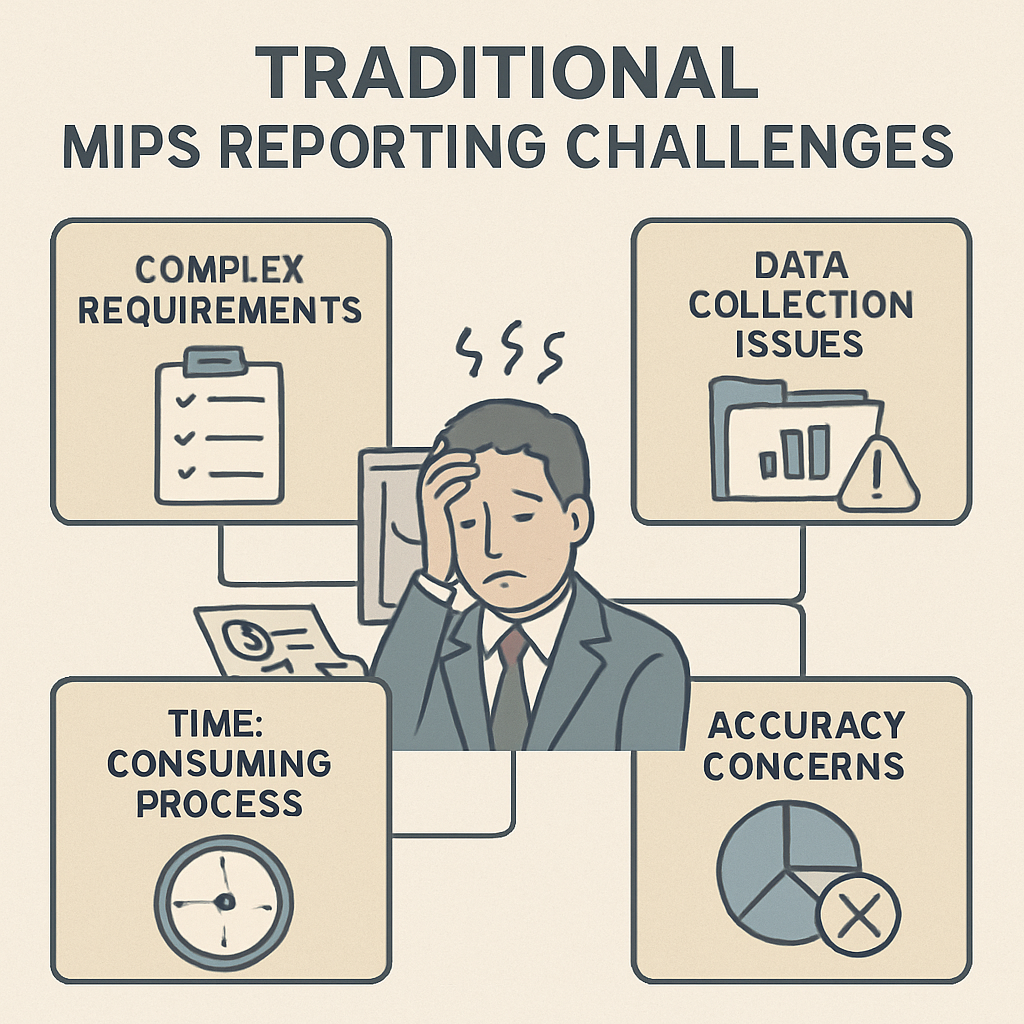
Administrative Complexity
One of the biggest challenges with Traditional MIPS is the administrative burden associated with:
- Selecting measures
- Monitoring performance
- Tracking documentation
- Managing compliance requirements
- Coordinating reporting timelines
This can consume substantial staff time and resources.
Less Specialty-Specific Relevance
Clinicians sometimes feel that traditional MIPS measures do not accurately reflect the care they provide.
For example:
- Dermatologists may report on general preventive measures unrelated to skin disease management
- Behavioral health providers may struggle with limited specialty-relevant metrics
- Specialty surgeons may feel disconnected from broad primary care measures
This can reduce clinician engagement with quality initiatives.
Advantages of MVP Reporting
Specialty-Focused Reporting
MVPs are designed to align directly with specialty workflows and patient outcomes.
For example:
- Dermatology MVPs focus on skin cancer management and biopsy follow-up
- Behavioral health MVPs emphasize depression remission and suicide risk screening
- Cardiology MVPs may focus on hypertension control and heart failure outcomes
This improves clinical relevance and provider buy-in.
Reduced Reporting Burden
MVPs simplify reporting by offering:
- Smaller measure inventories
- Predefined reporting pathways
- Better alignment between quality and cost measures
As a result, practices may spend less time managing administrative reporting requirements.
Improved Benchmarking
Under MVPs, providers are compared against peers within similar specialties rather than across unrelated clinical settings.
This creates:
- More accurate performance comparisons
- Better specialty-specific insights
- More meaningful quality benchmarking
Disadvantages of MVP Reporting
Reduced Flexibility
Because MVPs use predefined measure sets, clinicians lose the ability to select measures that may maximize scoring opportunities freely.
Practices may have fewer options to strategically optimize reimbursement outcomes.
- Workflow and EHR Adjustments
- Transitioning to MVPs may require:
- EHR workflow redesign
- Staff retraining
- Registry updates
- New reporting processes
- Enhanced care coordination tracking
Smaller organizations without dedicated quality teams may face implementation challenges initially.
Limited MVP Availability
Although CMS continues expanding MVP options, not all specialties currently have mature or fully developed pathways available.
Some organizations may need to remain in Traditional MIPS until more relevant MVPs become available.
Dermatology Practice Scenario: Traditional MIPS vs. MVP
Traditional MIPS
A small dermatology group using Traditional MIPS may report:
- Medication documentation
- Tobacco screening
- Preventive health measures
- Patient satisfaction metrics
Challenges
- Measures may not reflect dermatology-specific care
- Staff spends excessive time tracking unrelated measures
- Reporting feels disconnected from clinical outcomes
Benefits
- Greater flexibility in selecting high-performing measures
- Better strategic scoring opportunities
MVP
The same practice transitions to a Dermatology MVP focused on:
- Skin cancer management
- Biopsy follow-up
- Chronic inflammatory skin disease treatment
- Specialty-specific quality outcomes
Benefits
- Reporting aligns directly with clinical workflows
- Improved clinician engagement
- Reduced administrative complexity
Challenges
- Less flexibility in measure selection
- Increased benchmarking competition among dermatology peers
Multi-Specialty Medical Group Scenario
A large medical group with:
- Primary care
- Orthopedics
- Gastroenterology
- Cardiology
- Behavioral health
may benefit from Traditional MIPS because centralized reporting teams can standardize reporting across specialties.
However, if each specialty adopts separate MVPs:
- Reporting workflows may become fragmented
- EHR configurations become more complex
- Administrative oversight increases
Still, specialty departments may gain more clinically meaningful performance insights through MVP participation.
Financial Impact of MVP vs. Traditional MIPS
Both reporting models directly affect Medicare payment adjustments, including:
- Positive reimbursement incentives
- Neutral adjustments
- Financial penalties for poor performance
Healthcare organizations should evaluate:
- Internal reporting capabilities
- EHR readiness
- Registry support
- Staffing resources
- Specialty-specific reporting needs
- Provider engagement levels
Organizations with mature reporting programs may initially perform better under Traditional MIPS, while specialty-focused practices may benefit from MVP simplification over time.
Preparing for the Future of MIPS Reporting
CMS continues signaling long-term movement toward broader MVP adoption as part of its value-based care strategy. Healthcare organizations should begin preparing by:
- Evaluating available MVP pathways
- Assessing EHR and registry readiness
- Reviewing specialty-specific reporting measures
- Training clinicians and administrative staff
- Strengthening population health management capabilities
Practices that proactively adapt to evolving MIPS frameworks may gain long-term operational and financial advantages.
Conclusion
The transition from Traditional MIPS to MIPS Value Pathways represents a significant shift in healthcare quality reporting and value-based reimbursement. While Traditional MIPS offers flexibility and strategic reporting opportunities, MVPs provide more focused, specialty-specific, and clinically meaningful performance measurement.
For healthcare clinicians, practice managers, and administrators, selecting the right reporting model depends on organizational size, specialty focus, reporting infrastructure, and long-term operational goals. To learn more about MVP vs. Traditional MIPS Reporting, schedule a consultation with TriumpHealth or contact us via email sales@triumphealth.com or call us at 88874738363.