

Hyperbaric Oxygen Therapy (HBOT) Medicare Credentialing Requirements

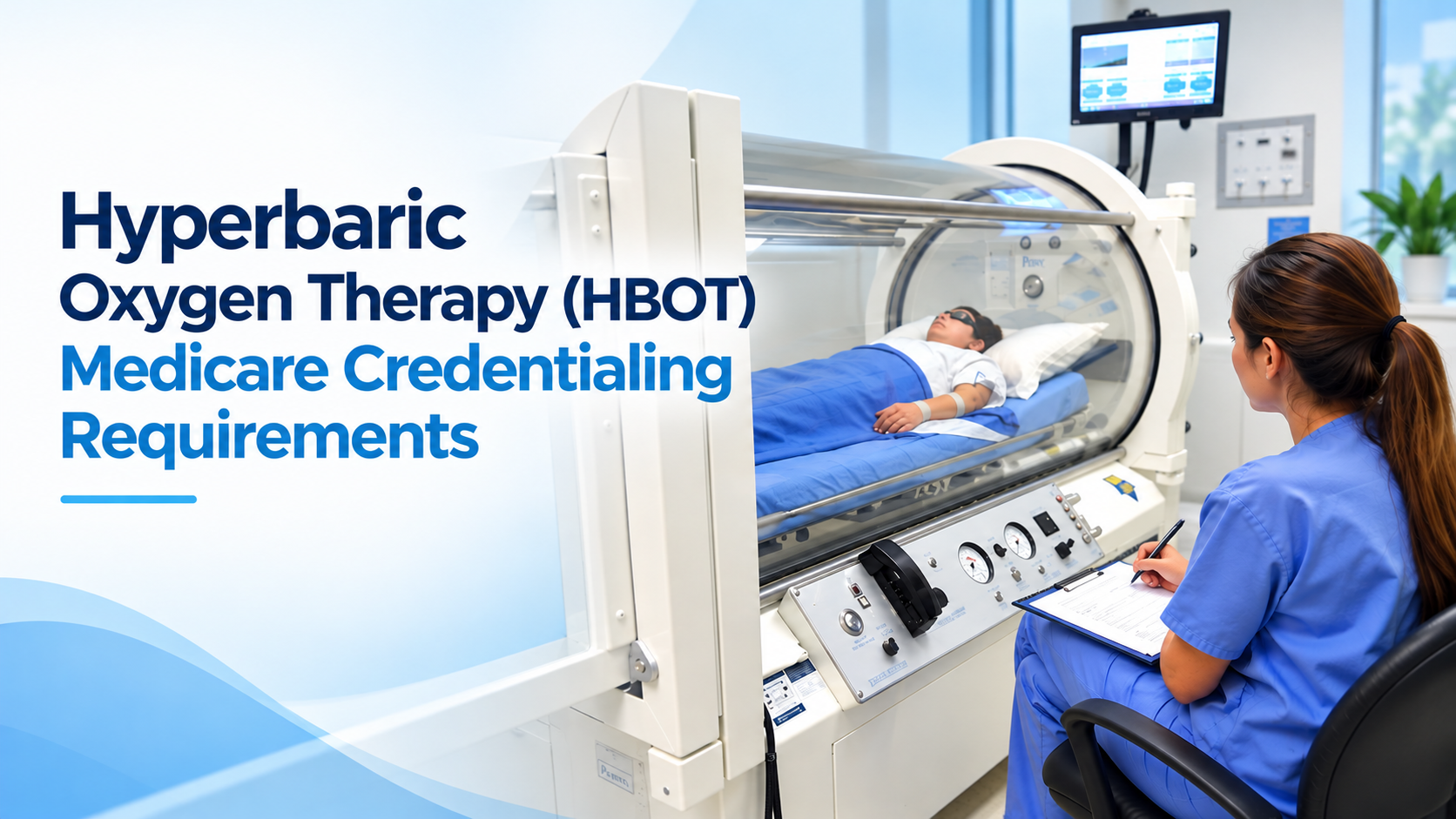
Hyperbaric Oxygen Therapy (HBOT) Medicare Credentialing Requirements | TriumpHealth
Hyperbaric oxygen therapy (HBOT) is an important treatment option for certain complex wounds and other qualifying medical conditions. However, establishing an HBOT practice involves more than purchasing a hyperbaric chamber and hiring qualified medical professionals.
For hyperbaric facility owners, physicians, medical directors, and healthcare administrators, understanding Medicare enrollment, provider credentialing, billing eligibility, and ownership requirements is essential to establishing a compliant and financially sustainable practice.
One of the most common questions facing new and existing hyperbaric oxygen therapy centers is:
Does an HBOT facility require Medicare CMS-855B or CMS-855A enrollment? The answer depends primarily on the facility’s organizational structure, Medicare provider classification, services rendered, and billing arrangements.
This guide explains the differences between Medicare enrollment applications, the implications of billing CPT 99183 and HCPCS G0277, and how physician ownership versus a separate Management Services Organization (MSO) can affect enrollment and reimbursement.
Understanding Medicare Enrollment for Hyperbaric Oxygen Therapy
Medicare generally does not enroll an individual hyperbaric chamber as a separate healthcare provider. Instead, Medicare enrollment applies to the eligible healthcare provider or supplier organization furnishing the services.
Two Medicare enrollment applications are particularly important to understand.
CMS-855B: Clinics and Group Practices
CMS-855B is generally used by physician-owned medical practices, group practices, and certain other Medicare Part B suppliers. A standalone physician’s medical office offering hyperbaric oxygen therapy would typically evaluate CMS-855B enrollment.
CMS-855A: Institutional Healthcare Providers
CMS-855A is used by Medicare-recognized institutional providers, including hospitals and certain other eligible healthcare facilities. For HBOT services provided through a hospital outpatient department, the hospital’s institutional enrollment and applicable provider-based requirements generally govern facility billing.
Medicare Enrollment Comparison
| Facility or Business Structure | Typical Medicare Enrollment |
| Independent physician-owned HBOT clinic | CMS-855B |
| Physician providing HBOT supervision | CMS-855I |
| Hospital outpatient HBOT department | Hospital CMS-855A enrollment |
| Physician clinic leasing a chamber from an MSO | CMS-855B for eligible medical practice |
| Independent LLC operating clinical HBOT services | Requires evaluation of legal structure and eligible Medicare provider type |
Understanding HBOT Billing: CPT 99183 vs. HCPCS G0277
One of the most important considerations in HBOT credentialing is determining which services the facility intends to bill. Two codes are especially relevant.
CPT 99183: Physician Attendance and Supervision
CPT 99183 represents physician attendance and supervision of hyperbaric oxygen therapy, per session. A properly enrolled physician may bill eligible professional services when Medicare coverage, supervision, documentation, and other applicable requirements are satisfied.
HCPCS G0277: Hyperbaric Chamber Treatment
HCPCS G0277 describes hyperbaric oxygen treatment delivered in a full-body chamber, billed per 30-minute interval. This code relates to the hyperbaric chamber treatment itself rather than the physician’s attendance and supervision.
Scenario 1: The Physician Practice Owns and Operates the Hyperbaric Chamber
Consider an independent medical practice that:
- Is legally organized as an eligible physician practice
- Owns and operates its hyperbaric chamber
- Employs or contracts with qualified clinical personnel
- Provides treatment under appropriate physician supervision
- Maintains clinical records and bills patients through medical practice
In this scenario, the physician practice would generally evaluate CMS-855B enrollment, together with CMS-855I enrollment for applicable physicians and Medicare benefit reassignment where appropriate.
The practice would also be responsible for maintaining appropriate licenses, clinical supervision, equipment safety, medical records, and billing compliance.
Does Owning the Chamber Allow the Practice to Bill G0277?
Not necessarily. Ownership of the equipment does not independently establish Medicare coverage or reimbursement eligibility. The medical practice must also satisfy applicable requirements relating to:
- Medicare provider enrollment and billing privileges
- Place of service and claim submission
- Covered medical indications
- Physician supervision
- Clinical documentation and medical necessity
- Applicable Medicare billing and payment policies
This distinction is especially important for independent HBOT centers evaluating anticipated revenue from Medicare patients.
Scenario 2: A Separate LLC or MSO Owns the Hyperbaric Chamber
Some hyperbaric oxygen therapy practices operate under a Management Services Organization (MSO) model. Under this arrangement, a separate LLC or MSO may own the hyperbaric chamber and provide non-clinical business support to the medical practice. Depending on the applicable agreements and healthcare regulations, an MSO may provide:
- Equipment ownership, leasing, and maintenance
- Administrative and operational support
- Facility management
- Scheduling and non-clinical staffing
- Revenue cycle management and billing administration
- Other nonclinical business services
Meanwhile, physician practice remains responsible for providing medical treatment, exercising clinical judgment, and maintaining appropriate clinical supervision.
How Does MSO Ownership Affect Medicare Enrollment?
If the physician practice is the actual medical service provider, it would generally continue to evaluate CMS-855B enrollment, even if the hyperbaric chamber is owned by a separate LLC or MSO. The MSO does not ordinarily qualify for CMS-855A simply because it owns medical equipment or provides administrative services. Likewise, the MSO cannot automatically bill Medicare for HBOT treatment using the medical practice’s enrollment credentials.
The business arrangement must accurately reflect which legal entity:
- Provides medical treatment
- Controls clinical operations
- Maintains patient records
- Employs or contracts with clinical personnel
- Meets Medicare enrollment requirements
- Is legally entitled to submit Medicare claims
HBOT Facility Ownership Structures and Regulatory Compliance
Hyperbaric oxygen therapy facilities may operate under different ownership and management structures depending on their business model and the states in which they provide services. Common ownership structures include the following.
Physician-Owned Medical Practice
A physician-owned medical practice directly provides HBOT services and owns or leases its hyperbaric chamber. The practice generally evaluates CMS-855B enrollment, together with applicable individual physician enrollment and reassignment requirements.
Physician Practice Supported by an MSO
A separate MSO may own or lease the hyperbaric chamber and provide administrative, operational, equipment maintenance, and other nonclinical support services. Under this arrangement, the medical practice generally remains responsible for providing patient care, maintaining clinical oversight, and submitting eligible Medicare claims.
Hospital-Based Hyperbaric Oxygen Therapy Department
An HBOT department operated as part of a Medicare-enrolled hospital generally falls under the hospital’s institutional enrollment and applicable Medicare provider-based billing requirements.
Whether a chamber is owned by a physician practice or leased from an MSO or operated by a hospital does not, by itself, determine whether CMS-855B or CMS-855A is required. The appropriate enrollment depends on the legal entity furnishing healthcare services, its Medicare provider classification, and applicable billing arrangements.
Does an HBOT Facility Need Separate Accreditation or Licensing?
Medicare enrollment is only one component of operating a hyperbaric oxygen therapy practice. Depending on the facility’s location, services, ownership structure, and payer requirements, additional considerations may include:
- State healthcare facilities and professional licensing requirements
- Physician supervision and staff qualifications
- Hyperbaric chamber safety standards and operating procedures
- Equipment maintenance and inspection requirements
- Emergency preparedness and patient safety
- Accreditation or certification requirements imposed by applicable programs or payers
- Medicare and commercial payer-specific documentation requirements
Facility owners should evaluate the requirements that apply to their particular operational structure rather than assuming that every hyperbaric chamber must receive separate Medicare accreditation.
How TriumpHealth Can Assist Hyperbaric Oxygen Therapy Facilities Nationwide
At TriumpHealth, we help healthcare organizations across the United States navigate complex provider credentialing, payer enrollment, and reimbursement-related administrative requirements. Our services for eligible hyperbaric oxygen therapy practices may include:
Medicare Enrollment: Evaluating the appropriate Medicare enrollment classification and identifying applicable enrollment requirements. Preparing, submitting, and monitoring eligible group and individual provider enrollment applications. Assisting with applicable Medicare reassignment arrangements between physicians and medical practices.
Commercial Payer Credentialing: Supporting eligible HBOT facilities and physicians with commercial insurance credentialing and payer participation applications.
Ownership and Operational Documentation Review
Identifying enrollment-related documentation requirements for physician practices and MSO-supported healthcare facilities.
Ongoing Credentialing Maintenance
Supporting provider additions, practice location updates, enrollment changes, revalidations, and ongoing credentialing maintenance. Where legal, regulatory, or specialized reimbursement interpretation is necessary, appropriate confirmation from legal counsel, licensing authorities, CMS, or the relevant Medicare Administrative Contractor may be required.
Conclusion: Understanding the Right Medicare Enrollment Structure for Your HBOT Facility
For hyperbaric oxygen therapy facility owners, physicians, and healthcare administrators nationwide, selecting the appropriate Medicare enrollment structure is an important step toward compliant operations and successful payer participation.
Whether a chamber is owned directly by the medical practice or through a separate LLC or Management Services Organization (MSO), Medicare enrollment and billing eligibility depend on the legal entity furnishing the services, the facility’s operational structure, and applicable federal and state requirements.
TriumpHealth assists HBOT facilities nationwide with Medicare and commercial payer enrollment, and ongoing credentialing maintenance, helping healthcare organizations navigate complex payer requirements and prepare for compliant billing operations.
Whether you are establishing a new hyperbaric oxygen therapy center, or expanding an existing physician practice, TriumpHealth can help you understand the enrollment process and identify the administrative requirements relevant to your organization. Schedule a free consultation, email us at sales@triumphealth.com, or call (888) 747-3836 x0 to discuss your hyperbaric oxygen therapy credentialing and payer enrollment needs.